Many architects seem to struggle with the balance between integrity and virality — a shift in priorities that has been accelerated by social media and our generation’s shortening attention span. When going viral becomes currency, superficial factors such as the design of a building far outweigh its social responsibilities. Through his work, architect Diébédo Francis Kéré has proven, time and time again, that the former simply results from a singular focus on the latter. He has been a catalyst for growth in his home country of Burkina Faso and the greater West African region by investing in his cultural heritage and proudly representing his people all over the world. It stands to reason that much of his work eclipses the discussion of individual taste, elevating him into a class of rare company. Kérés’ philanthropic and ecological efforts, as well as his focus on the subjective experience and his lack of artistic ego, make him one of the most important architects of our time and a mandatory subject of study for everyone seeking purpose beyond material success.

Ⓒ Erik Petersen
It was in the early 70s, when the chief of Gando, a small village of less than 3000 people in rural Burkina Faso, decided to send his oldest son to the nearby city of Tenkodogo to attend school. Immediately, his decision was met with scepticism by the people of Gando. After all, why wouldn’t he have his son work in the fields, like so many other young men, in order to provide food to the community? But his father had other plans, so at the age of seven, Francis Kéré had to leave his home and his family behind in order to become the first person from Gando to learn how to read and write.
In his 2013 TED talk, he recounts: “The reason why I do what I do is my community. When I was a kid, I was coming back to Gando every holiday. By the end of every holiday, I had to say goodbye to the community, [and] all women in Gando would give me their last penny. I asked my mother one day, why do all these women love me so much? She answered, they are contributing to pay for your education, hoping that you will be successful and one day come back and help to improve the lives of our community…“
After recognizing Kéré’s academic potential, the Burkinabé government granted him a scholarship to pursue further education abroad. However, instead of striving to become a politician, teacher, or police officer, he decided to leave his home country to go to Berlin and become a carpenter. Growing up in decrepit homes that were frequently damaged by rain, wind, and termites, he chose this apprenticeship with the goal of being able to provide better housing for his family back in Gando. Although very privileged to have been granted this opportunity, his life in Berlin certainly wasn’t easy. Getting up in the middle of the night to deliver newspapers and working as a carpenter during the day, Kéré still managed to attend school in the evenings to finish his high school studies in order to be able to study architecture.
The desire to help his community threads itself through his entire life, and during his undergraduate studies in Germany, he felt the urgency to act on this desire sooner rather than later. Having studied in a tiny classroom with over 150 other children and no ventilation himself, the then 22-year-old set out to build the first primary school in his home village of Gando. Kéré didn’t care about finishing his degree, as long as he acquired enough knowledge to return to his community and do his part in helping them live a better life. That was his number one priority, so in 1998, he set up his NGO Schulbausteine für Gando e. V. with the objective to raise funds for the project. With the help of sponsors and asking his fellow students for small donations, he eventually managed to raise $30.000.

Typical school and classroom in West Africa – photo credit unknown
“I see myself as a bridge between Africa and the West”
Back in Gando, Kéré told his community about his idea to build the school out of clay, a nearly unlimited resource in Burkina Faso that had been used there for thousands of years. His people didn’t take lightly to these news, though, and accused him of having been brainwashed by the Germans in order to suppress their development and keep them from adopting modern building technologies. What they wanted was a glass and concrete building, just like the ones they had seen in the West.
This is where Kérés’ deep understanding of both cultures came into play, marking the first manifestation of his architectural philosophy. In his 2011 talk at Design Indaba, he argues that African architecture needs to develop its own identity, independent of the West — a sentiment that holds true for most developing regions across the globe. The reason that this isn’t an entirely intuitive issue is that, as part of the French Colonial Empire, many West African cities were restructured in order to resemble the layout of their great Western counterparts with their rigid structure and wide boulevards — although to little effect.


Ouagadougou, capital of Burkina Faso, ca. 1930s – Mittelholzer, W.: Tschadseeflug, 1932, Abb. 79.: ETH-Bibliothek Zürich
Ouagadougou border, ca. 2009 – Ⓒ Flickr / piazl
Like weeds, vernacular compounds started sprouting from the ground just outside the city borders, reclaiming what had been taken by the Europeans. Similar processes can be observed in many former colonies across the globe, such as India or the Philippines. However, after hundreds of years of being labeled as primitive and forced to adopt the architectural fruits of a foreign culture, these countries voluntarily started copying the urban structures they saw in the West. This learned synonymization of Western technology with prosperity is dangerous because it carries the risk of destabilizing technological development in these regions rather than accelerating it. The results are buildings that visually resemble their Western counterparts but are utterly disconnected from their own cultural heritage. A specific issue in Burkina Faso is the tropical climate, which requires artificial ventilation systems in order to make certain concrete buildings inhabitable at all. Now consider the lack of electricity to run these systems, as well as the knowledge to repair them, and the problem becomes apparent. What these countries need to do, says Kéré, is to develop their own technologies based on the traditions they inherited as well as the resources available to them.

Left: Eiffel Tower, Paris – Ⓒ Tognopop
Right: Monument des martyrs, Ouagadougou – Ⓒ Sputniktilt
Eventually, Kéré managed to convince his community to let him use clay to build the school. Without the means to employ western construction methods, he had to resort to the intuitive knowledge and building traditions of his own culture in order to work around the region’s specific set of problems.
In Burkina Faso, the monsoons come largely unannounced and cause significant damage to the clay compounds. Additionally, the region has very few trees and no electricity, so burning the bricks in order to make them more durable isn’t an option. Killing two birds with one stone, Kéré used a mixture of clay and 8% cement, making the bricks largely resistant to the rain and allowing him and his team to hand-press them, only using manpower.


Photos – Ⓒ Siméon Duchoud | Plans – Ⓒ Kéré Architecture
To keep the inside from overheating, Kéré came up with an ingenious concept for the roof, which consists of two layers: The first is a massive brick ceiling, the second is a lightweight metal roof held up by cheap rebar to allow the air to flow in between. Heated up by the unforgiving West African sun, the upper roof, in turn, heats up the air underneath, causing it to expand. The shape of the roof allows the air to escape to one side while sucking in fresh air behind it. This way, the air constantly flows through the space between the two layers, cooling the brick ceiling and the inside of the room. This effect is further exaggerated by cross-ventilation through the windows on both sides of the school, creating a pleasant environment for both students and teachers.
Since then, Kéré has used similar techniques in projects all over Africa, and despite an indoor temperature of over 30°C, his buildings are commonly called fridges by the people who consider them wonderfully cool compared to the outside and other less sophisticated buildings — and all this, without the use of air conditioning units.
In 2004, the project was awarded the Aga Khan Award for socially responsible architecture.


Diagram – Ⓒ Kéré Architecture | Photo – Ⓒ Erik-Jan Ouwerkerk
Investing in a region’s education by building schools is a long-term strategy to ensure its future prosperity, but with poverty and illiteracy being imminent global problems, short-term action is just as critical.
In a tiny agricultural village like Gando, the only way for the community to survive is to work together. This means that many young men and women have to leave their families in order to find work and earn money. Some have to leave the country altogether and go to Europe or America, even if there’s a chance of never seeing their families again.
For his first project, Kéré gathered the most capable people in Gando and actively included them in the construction process. He taught them how to lay the foundations, press the bricks, and weld the steel for the roof. Others helped by carrying stones and water, compressing and polishing the clay floor, or painting the windows. Everybody wanted to be involved, so eventually, the whole village came together to help build the school.


People of Gando participating in the construction process – Ⓒ Kéré Architecture
After putting their own blood, sweat, and tears into these buildings, his people developed a connection to them. The school became part of their own identity, innovating on their traditions, making tangible the impact of these new ideas. Even more importantly, Kéré is actively educating his people, who can use their new skills on construction sites across the country to earn money for their families without leaving them for long periods of time. The system feeds itself as this knowledge is shared with more and more people who, in turn, build more, much-needed infrastructure.
It took one man who had faith in his people and their traditions to start this chain reaction, and although it will take many more, as well as some time, we are witnessing a new wave of progress in developing countries like Burkina Faso. Today — over 20 years later — some of the workers involved in the construction of the Gando Primary School are still among his team’s core members, helping Kéré realize projects all over Africa.
Recognizing the need to look for innovation within a region’s own traditions as opposed to simply copying more technologically advanced cultures, Kéré wasn’t satisfied with the success of his first project, so he decided to keep challenging himself and his community to think outside the box.
In 2008, his primary school needed an extension, and instead of using the same roof structure, he decided on a similar concept, including a vaulted brick ceiling. Again, there was some pushback from the people who weren’t exactly thrilled about the idea of their children sitting under a single curved layer of bricks, and convincing them that the arch wouldn’t collapse required careful persuasion on his part.
Kéré’s approach was as simple as it was educational: First, he built a true-to-size mockup. Then, he climbed on top and started jumping. Slowly, other people dared to join him, and soon the whole village was watching how a handful of people stood atop a single curved layer of bricks.


Francis Kéré in the middle with the hat – Ⓒ Kéré Architecture
This is another crucial concept when it comes to building in regions where even the most basic education remains a privilege to the minority of the population: Had he just built the roof, despite the people’s skepticism, they never would’ve accepted ownership of the building, leaving them with a foreign object permanently planted among them. This isn’t much different from what happened under French rule or what still happens in many places around the world today. Architects need to keep in mind that what distinguishes architecture from a mere building is the subjective experience of the people who use it, which is especially true if the people in question are neither able to read nor write, and unknown technologies are met with a healthy dose of suspicion.


Photos – Ⓒ Erik-Jan Ouwerkerk | Plans – Ⓒ Kéré Architecture
Other instances in which the people of Gando were actively challenged to look for innovation include the primary school’s public library. Here, Kéré wanted to showcase the use of familiar objects in the building process, so he decided to recycle old clay pots, typically used to carry water or grain. These pots are an abundant resource in an otherwise mostly bare landscape, but aren’t considered as such by the people who were conditioned to disregard the value of their own customs. Through his initiative, the whole village came together to bring hundreds of pots to the construction site, where they were cut into sections, placed on the ceiling formwork, and set in concrete. The result is a scenic array of circular openings for the light to shine through and the hot air to escape, once again charging this humble clay building with a powerful cultural identity.


Ⓒ Kéré Architecture
Providing much-needed infrastructure for his community is commendable enough. But Kéré takes it one step further by creating structures that are capable of adding tangible value themselves.
Three years after the construction of the primary school, qualified teaching personnel needed to be incentivized to leave the city and move to the rural area of Gando. Consequently, six individual homes were built in a wide-arced layout, resembling the traditional Burkinabé compound. In this case, the buildings are topped by a two-layered vaulted roof with a crescent-shaped opening in between, allowing light and air to naturally flow in and out of the rooms. Large roof overhangs and a Bitumen coating protect the walls from the weather, while granite and cement foundations prevent the moisture in the soil from rising. Here, the crucial innovation came in the form of channels starting on the ends of the walls, flowing together on the ground in front of the buildings in order to collect rainwater that can be used to grow wheat and vegetables for the inhabitants or to water the surrounding vegetation.


Photos – Ⓒ Erik-Jan Ouwerkerk | Plans – Ⓒ Kéré Architecture
A couple of years later, the Burkinabé government decided to reward the success of Gando’s first primary school with a high school to provide for secondary education. Following his tried-and-true blueprint for building in this region, Kéré once again combined the use of local materials and construction methods with the training and employment of local labor. In addition, he was still actively searching for new building techniques, eventually coming up with a way to cast the clay in-situ as if it were concrete.
“This innovative method allows for a faster building process and greater architectural flexibility than the traditional clay bricks, while being more sustainable and less expensive than concrete. In order to further maximize resources, the classrooms are all made up of 2m-wide wall modules whose steel formwork can be removed within 48 hours of pouring and directly reused.” (Kéré Architecture)


Ⓒ Kéré Architecture
Apart from his trademarked roof, a low-tech geothermal cooling system was used to passively cool the rooms. Here, the hot eastern trade wind is being filtered by the extensive terraced vegetation surrounding the school, cooled down by the thermal mass of the ground, and eventually channeled into the buildings through simple underground pipes.
In large part due to Kérés’ unrelenting drive towards sustainable innovation, Naaba Belem Goumma Secondary School received the coveted Global Holcim Award in 2012.


Ⓒ Lafarge Holcim Foundation
In 2020, the world was reminded of the lack of media coverage regarding social issues outside of the Western hemisphere when peaceful protests in Nigeria escalated into violent riots. Only after multiple outcries of influential African American activists, amplifying the voices of the many young Nigerians who were killed by corrupt police forces, did Western media start paying attention to the situation. However, any temporary uptick of screen time does not address the lack of adequate global representation of developing countries. Many people still think of them as merely a couple of steps behind the current state of technology in the West, but fail to consider their individual trajectories that are informed by their own cultural heritage. This ties into the idea of elevating these cultures into the most progressive versions of themselves as opposed to imposing foreign concepts of innovation that not only attempt to skip multiple steps on their technological timeline but are also utterly disconnected from any cultural basis on which they aim to improve. With this in mind, there is a need for role models that serve as a reminder of the immense cultural value these people inherited.

© Sunday Alamba / dpa
Today, Francis Kéré is one of the most sought-after architects in the world, a position he did not attain through building skyscrapers, concert halls, or stadiums, but by using the attention he received in the West to represent his culture on a global stage.
In 2017, Kéré was chosen to design the Serpentine Pavilion, a temporary installation annually commissioned by the Serpentine Gallery in London. Since the year 2000, this privilege had been granted to architects such as Zaha Hadid, Frank Gehry, and Bjarke Ingels, but instead of succumbing to the pressure of his famous predecessors, he decided that the visual impact of his pavilion should, once again, not be the focus of his attention. Throughout his professional life, we can observe this counterintuitive approach, in which the design itself is merely a function of other factors such as education, health, and environmental protection. In this case, however, the setting doesn’t require the architect to take any of these considerations into account, which is why many take the chance of designing the pavilion through the lens of their own artistic ego. But Kéré had other intentions, using this opportunity to pay tribute to his people and represent them on one of the world’s most significant architectural stages.


© Iwan Baan
Evoking the spirit of the central gathering space in an African village, Kéré decided that he wanted to bring people together, putting their connection to each other and their environment at the center of his design. In Gando, a big tree in the heart of the village had served his community as a kindergarten for the young, a theater for celebrations and performances, and at times even a hospital. In order to mimic the inherent naturalistic symbolism of this tree, Kéré designed a steel truss, topped with an extensive wooden canopy, which provides shade while letting the wind circulate through the structure. During heavy rainfalls, a transparent membrane channels the water into the middle of the roof, forming a waterfall that theatrically cascades down the oculus before draining into the ground, where it can be used to irrigate the surrounding vegetation.
Every part of the design was deliberately chosen, like the enveloping wood formation, which resembles the pattern on traditional Burkinabé clothing. In the daytime, sunlight pierces through the gaps between the blocks, while at night, the pavilion seems to glow from the inside. The wood was painted with a protective indigo blue coating, a color traditionally used for celebratory occasions by the people in Gando. Even the seating furniture, which is a direct replica of a stool in his mother’s home or the little children’s playground in front of the pavilion, serving as a concept model for an idea he had for the new parliament building in Ouagadougou, was carefully considered.


Photos – © Iwan Baan | Plans – © Kéré Architecture
Two years after his success at the Serpentine Gallery, Kéré was invited to design another temporary installation, this time, for the Coachella Music Festival in California. By now, it should come as no surprise that his design was heavily influenced by the vernacular symbolism of his homeland.
Ten individually sized pavilions spiral outwards from the center, creating a dynamic layout that allows for the natural flow of people, air, and light. During the festival, numerous small groups used this loosely arranged formation to meet up and relax, giving rise to the feeling of being inside a small village. Here, inspiration came in the form of the so-called Baobab Tree, native to Burkina Faso. Over time, its thick trunk hollows out, creating natural skylights, which are mirrored in the gaps between the panels of each structure.


Photos – Ⓒ Iwan Baan | Plans – Ⓒ Kéré Architecture
At night, Sarbalé Ke — or the House of Celebration — is lit up by in-ground lights, transforming it into a set of colorful beacons, standing proudly against the night sky. “In my culture,” says Kéré, “where there is no electricity, if we see a light, we watch it for a while. If it stays lit, we walk towards it, and there will be a celebration.“


Photo 1 – Ⓒ Avishay Artsy / KCRW | Photo 2 – Ⓒ Kéré Architecture
The last project has no immediate social impact and doesn’t impose itself on its environment. Yet, it is a masterpiece, built to embody the purest form of architectural poetry. Located at the Tippet Rise Art Center in rural Montana, Xylem was built as a natural sanctuary for meditation and intimacy. According to Nina Tescari, project leader at Kéré Architecture, the pavilion aims to make tangible the “intimate, secret part of nature: the heart of a tree.” Fittingly, a total of over 12 kilometers of pine logs were sourced from a sustainable pruning process, aiming to maintain a healthy forest.


Photos – Ⓒ Iwan Baan | Plans – Ⓒ Kéré Architecture
Bundles of logs are loosely arranged in a hexagonal steel grid in order to create an organic honeycomb canopy with natural openings for the light to pierce through. The bundles reach into the interior space at different elevations, creating the feeling of being inside a living organism. This concept is reminiscent of a Toguna, a traditional public building of the Dogon people, native to Burkina Faso and Mali. In that case, the purpose of the low ceiling is to force visitors to sit, which helps prevent outbursts of violence during heated discussions and makes them feel protected and calm.
More logs wrap around each of the seven steel columns, seemingly growing out of organically shaped wooden benches that are arranged towards open and closed views of the surrounding nature. Nestled in between aspen and cottonwood trees, the structure is an extension of its environment, inviting the guests of the Art Center to sit down and have a chat, to read and relax, or simply listen to the gentle whisper of the nearby creek. Over time, the wood and the weathering steel will develop a natural patina, a permanent record of time, charging this place with the memories of the people who visited.


Ⓒ Iwan Baan
Architects often get lost in the conceptual poetry of a design but fail to realize that it has little to no meaning compared to the subjective experience of the visitor. In other words, you can’t tell someone to like a building based on objective reasoning when the execution fails to convey its intended character. For this reason, listen to how actual Tippet Rise visitors experience the pavilion and pay attention to the children’s pure and non-biased observations, giving us a glimpse into the true essence of this project [skip to 9:46]. Interestingly, Xylem was funded in parallel with the above mentioned Naaba Belem Goumma Secondary School in Gando, linking the experiences of both American and Burkinabé children.
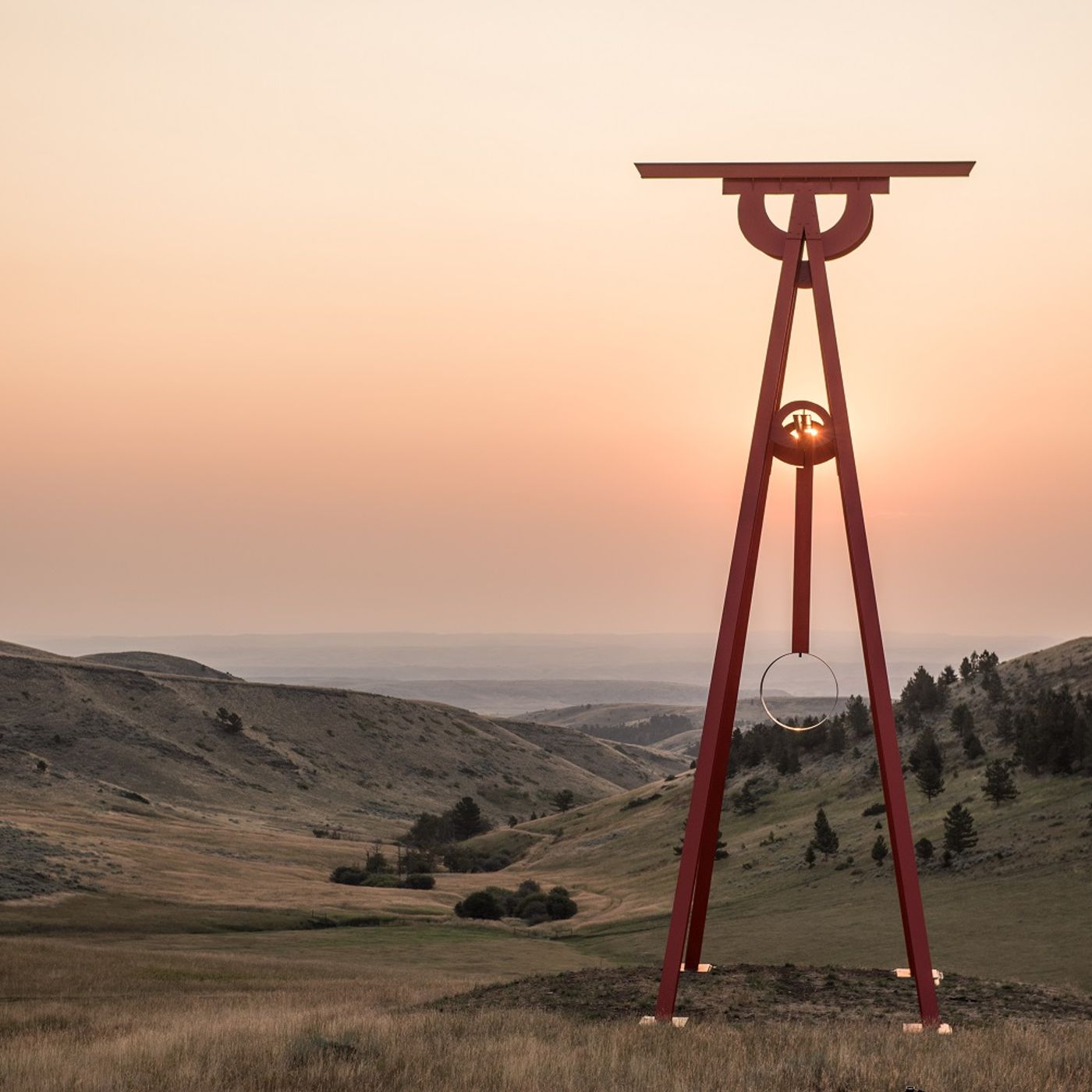
Francis Kéré – Tippet Rise Podcast
As we have seen, all of Francis Kérés’ projects, whether in Africa or elsewhere, reflect his unique blend of a strong African identity mixed with a Western education. Counterintuitively, the 56-year-old did not attain the privileged position of not having to work on competitions and frequently turning down project proposals by designing the most aesthetic architecture. His approach, in which the design, if not a direct result of relevant social and environmental factors, is only considered after these core issues have been addressed, stands in strong contrast to the egocentric motivations of many architects today. His life’s work centers around the desire to serve, educate, and represent his community, leaving architects and policymakers alike with a blueprint for working in developing regions around the world.
While I understand that his upbringing was certainly uncommon for most architects in the West, and that building primary schools in first world countries is far less socially impactful, I would like to urge everyone reading this, whether they are an architect or not, to broaden their scope, relating to both the countries they work in and the way in which they can be of service.
“… I hope that I was able to make my community proud.”
Update: March 15th 2022
Today, Francis Kéré was announced as the 2022 Laureate of the Pritzker Architecture Prize, which is widely regarded as the highest honor an architect can receive. “He is equally architect and servant, improving upon the lives and experiences of countless citizens in a region of the world that is at times forgotten,” states Tom Pritzker. Not only does this mark a crucial milestone in Kéré’s professional life, but it validates the notion that it is, in fact, possible to find ultimate success by using one’s privilege to give back to those who have uplifted you; those who have stayed behind and watched proudly as you transcended boundaries and disempowerment. The prize jury, chaired by former Laureate Alejandro Aravena, further comments, “He knows, from within, that architecture is not about the object but the objective; not the product, but the process. Francis Kéré’s entire body of work shows us the power of materiality rooted in place. His buildings, for and with communities, are directly of those communities – in their making, their materials, their programs and their unique characters. They are tied to the ground on which they sit and to the people who sit within them. They have presence without pretense and an impact shaped by grace […] For the gifts he has created through his work, gifts that go beyond the realm of the architecture discipline, Francis Kéré is named the 2022 Pritzker Prize Laureate.“
For more information, check out Kéré Architecture, and please consider donating to the Kéré Foundation.
List of projects in this article:
- Gando Primary School
- Gando Primary School Extension
- Gando Primary School Library
- Gando Teachers’ Housing
- Gando Naaba Belem Goumma Secondary School
- Serpentine Pavilion
- Sarbalé Ke
- Xylem
You might also like:


 Identitecture
Courage is often quiet, radiating from a place inside of us that is infinitely precious and reserved for when needed. You can exist within stillness and yet remain a murmuring brook of strength, inspiration and identity. You can build a fortress of softness, and still carry intangible, roaring bravery.
If needed it is possible to hold these pieces all at once, and you have probably more times than you know, without even realizing it. Perhaps with a tight grip, perhaps with loose fingers. It is all a part of your story. It is all part of Francis Kéré’s story, too.
Part of the seconds, minutes, months that make up our lives. Whether we stay connected or not.
A beautiful, well-thought piece. You should write more.
LikeLiked by 1 person
Well said. Thank you. More is on the way!
LikeLike
wow!! 13Time & Memory | Modern Architecture Part 1
LikeLike